
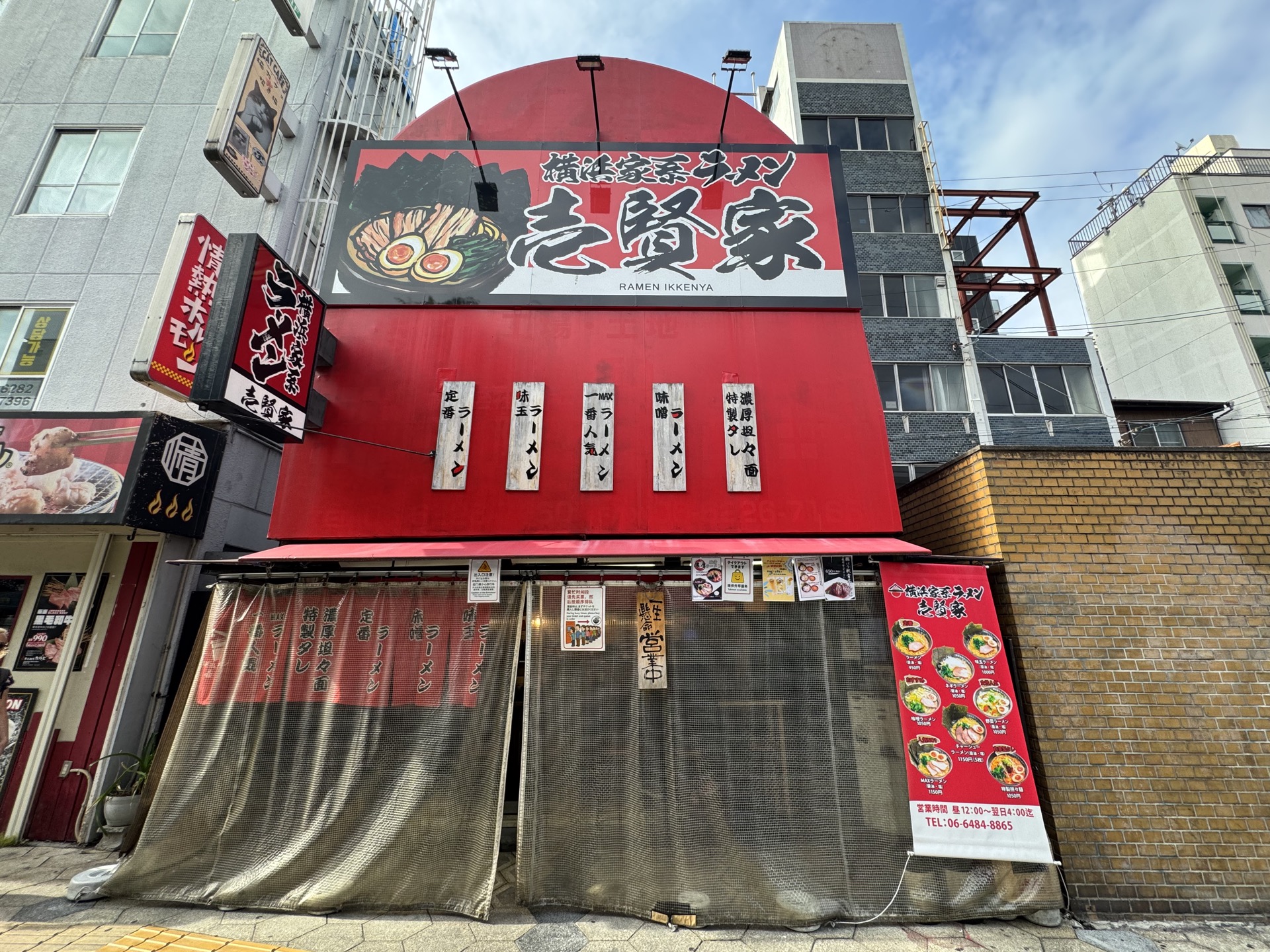
It was nearly 2am on a Thursday and I'd just stumbled out of an izakaya two blocks from Dotonbori with nothing resolved except a need for something rich and hot. I turned a corner in Nihonbashi and the red facade stopped me cold — bold, circular, almost aggressive. I pushed through the metallic mesh curtains. Three salarymen were already hunched over bowls. I sat down and ordered the MAX ramen at ¥1,150 without thinking. It's worth every yen: a deep, soy-forward Yokohama-style bowl that hits you somewhere behind the sternum, open until 4am every day, and priced under ¥1,200 for the full loaded version.
📋 At a Glance
| 📍 Address | 1-6-5 Nihonbashi, Chuo-ku, Osaka |
| 🕐 Hours | Noon – 4:00AM (daily, no regular closing day listed — confirm ahead) |
| 💴 Budget | ¥950–¥1,150 per person |
| 🚇 Access | Nihonbashi Station — Exit 10 (Sennichimae Line) or Exit 1 (Sakaisuji Line) — approx. 5 min walk north on Sakaisuji-dori |
| 💳 Payment | Cash only — bring yen, full stop |
| 🗒️ Menu | Japanese only — no English menu, no ticket machine. Picture menu available on request; pointing works fine. |
| ⭐ Best For | Solo night owls, post-izakaya workers, anyone who wants a full bowl under ¥1,150 after midnight |
Why This Isn't Your Average Ramen Shop (It's Open Until 4am in Osaka)
Most ramen shops in Osaka shut down by 11pm. A few push to midnight. Ikkenya — full name 横浜家系ラーメン 志賢家, which you'll see in massive kanji above the entrance — goes until 4am. Every day. That single fact changes the entire type of person you'll find inside.
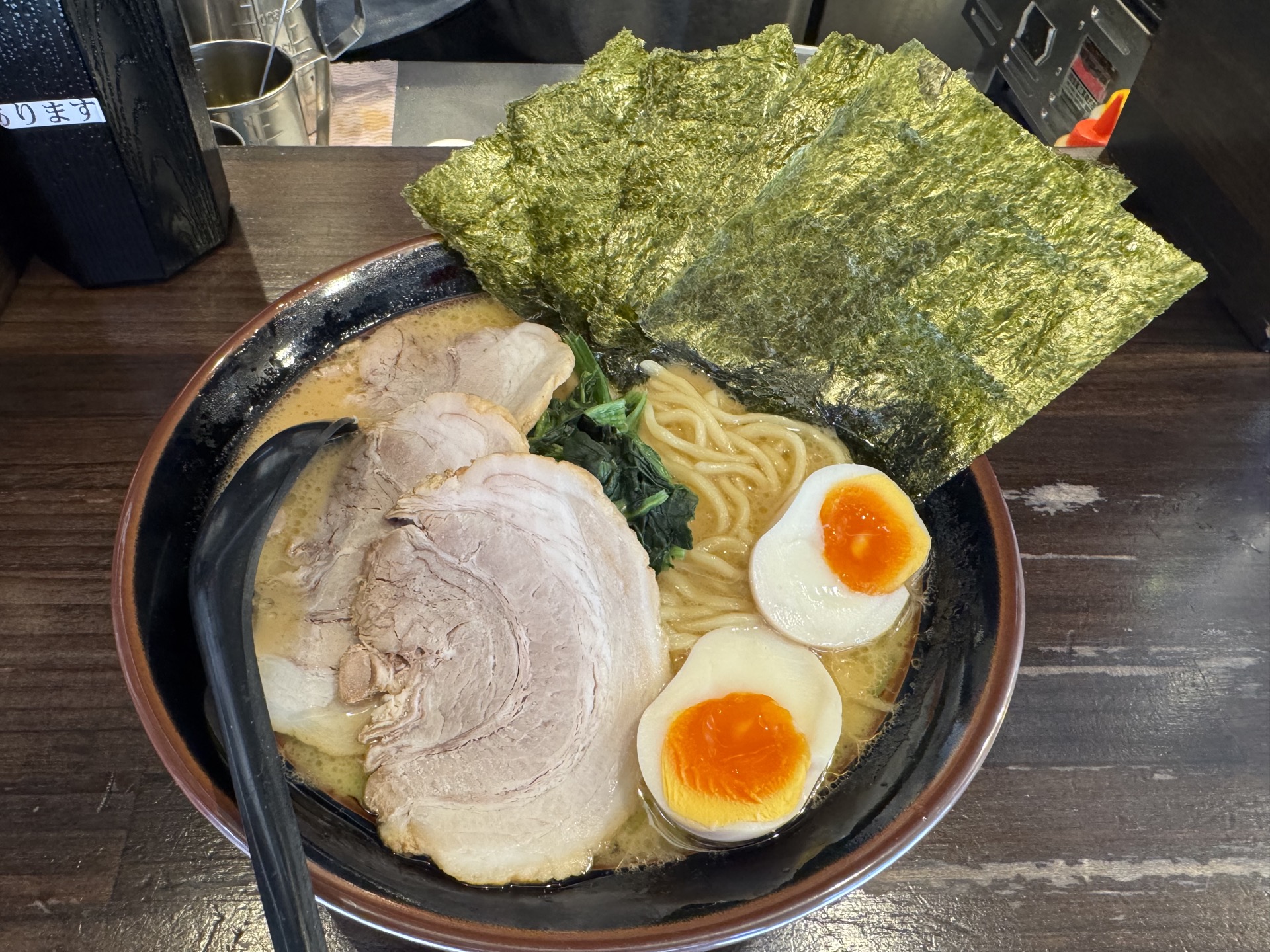
My bowl arrived in under five minutes. The broth hit hard on the first sip — saltier than I expected, even knowing ie-kei runs aggressive on sodium. I'm talking noticeably salty in a way that made me reach for the water pitcher before I was halfway through. That's not a complaint exactly, but it's worth knowing if you're sodium-sensitive or three drinks in and already dehydrated. Underneath the salt, the flavour had the density of a stock that's been reducing since someone's Tuesday shift — dark, slightly fatty, with a soy backbone that tasted purposeful rather than just heavy. I cracked the soft-boiled egg with my chopsticks and dragged the jammy yolk through the broth before it could set. I finished everything. The spinach made it feel, irrationally, like a responsible meal at 2am.
One thing I noticed about the nori: at ie-kei shops you're supposed to dip it in the broth and eat it fast before it disintegrates, and the sheets here go soft quickly — faster than I'd like. If you're a slow eater or you get distracted talking to the person next to you, you'll end up with soggy seaweed paste rather than the crisp-then-melting thing it's supposed to be. Eat the nori first. That's the move.
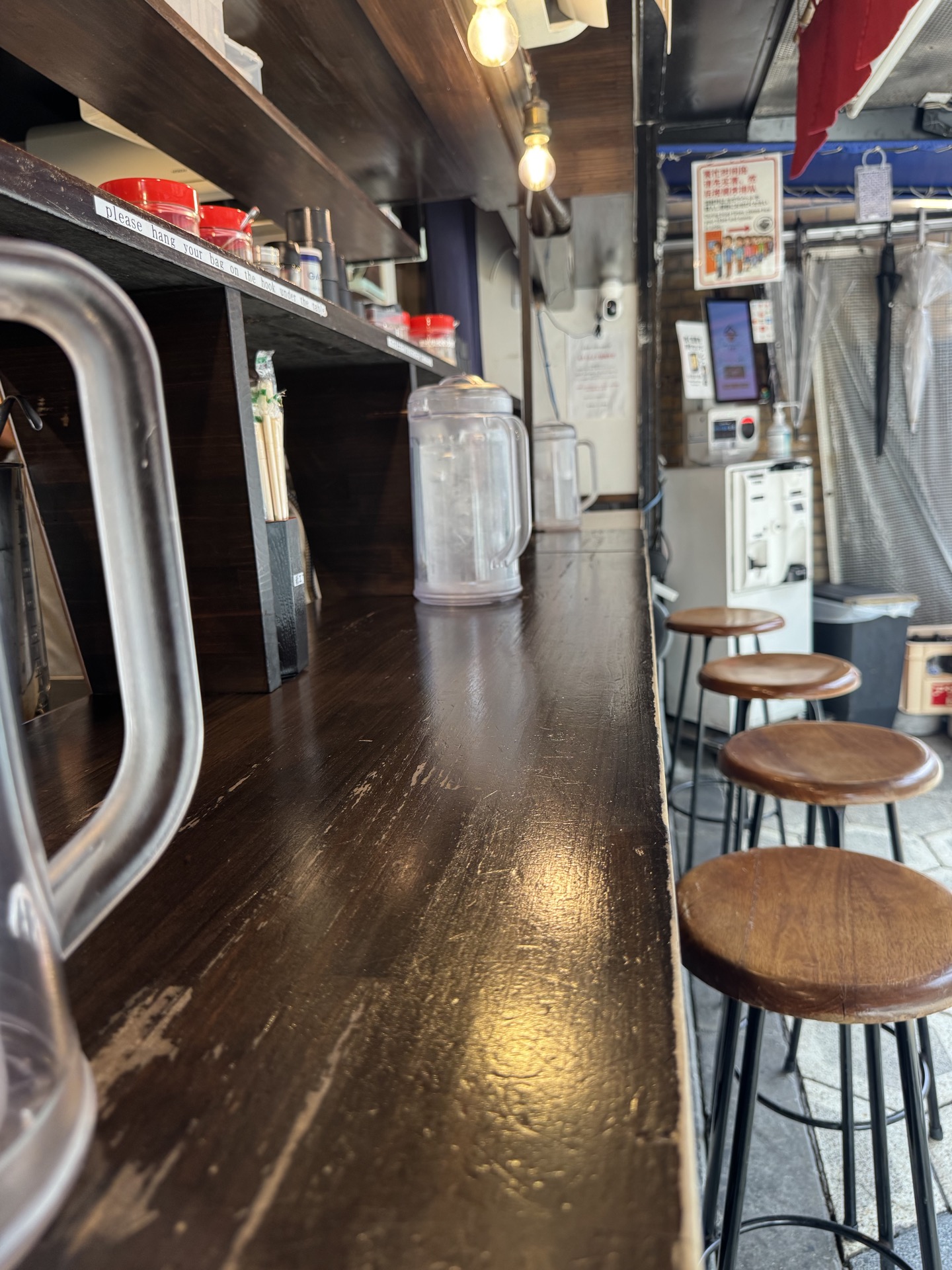
The interior is narrow. Counter seating only, maybe 10 stools across, no backs on the seats. If you arrive with a large backpack it goes on the floor between your feet and whoever's next to you, which means you're negotiating leg space with a stranger before you've ordered. Two friends who want to hold a conversation will find themselves talking at the wall in front of them, because there's nowhere else to look. Solo traveler or quiet pair? Perfect. Large group looking for an experience? Wrong address.

Yokohama-Style Ie-kei Ramen Explained: What Makes Ikkenya Different
A quick note for anyone who's been eating tonkotsu in Fukuoka and thinks they know what's coming. Yokohama ie-kei (家系) is its own thing. The broth combines pork bone with chicken and soy tare — the result is thicker and darker than a straight tonkotsu, with a salty, deeply savoury profile that can feel like a lot if you're used to lighter Osaka ramen. Ikkenya's version leans hard into that saltiness. Some people love that. I did, mostly, while also drinking two full glasses of water before I left.
The noodles are thick, flat, and moderately springy — you can request firmness (硬め/katame for firm, 普通/futsuu for standard, 柔らかめ/yawarakame for soft) and I'd recommend asking even if you have to point at the word on your phone. I went standard on my first visit and they held up well through the bowl, though by the last third they'd absorbed enough broth to go noticeably softer. On my second visit I asked for katame. Better.
Ikkenya is one of the only places in Osaka doing this style seriously. Most Osaka ramen leans miso or lighter shoyu. This is a different register entirely.
The Menu, Item by Item
Note: the menu is in Japanese only. No English version, no ticket machine. A picture menu exists — ask for it by saying 写真メニューありますか (shashin menyu arimasu ka) or just point at this table on your phone. Staff are patient.
| Item | Price | Alex's Take |
|---|---|---|
| ラーメン (Ramen — Soy or Salt) | ¥950 | The entry point. Same broth, standard toppings. Portion is honest but not generous — fine for a late snack, light for a full meal. |
| 味玉ラーメン (Seasoned Egg Ramen) | ¥1,000 | Adds a properly marinated soft-boiled egg. ¥50 upgrade that earns its keep. |
| ネギラーメン (Green Onion Ramen) | ¥1,050 | Spring onion cuts through the fat and does something useful to the salt level. Worth it if the broth feels aggressive. |
| 味噌ラーメン (Miso Ramen) | ¥1,050 | Diverges from the ie-kei style. I haven't tried it. Not why I come here. |
| 野菜ラーメン (Vegetable Ramen) — 女性人気 | ¥1,050 | Tagged "popular with women" on the menu. More veg, slightly lighter feel. Still the same high-sodium broth underneath. |
| チャーシューラーメン 5枚 (Chashu Ramen, 5 pieces) | ¥1,150 | For when you mean business. Five slices of chashu is not subtle. |
| MAXラーメン (MAX Ramen) — 人気No.1 | ¥1,150 | The one. Two soft-boiled eggs, nori, chashu, spinach, all of it. Order this first time, every time. |
| 特製担々麺 (Special Tantanmen) | ¥1,050 | House-made sauce, genuinely different from the ie-kei bowls. Curious about it. Haven't committed yet. |
What to Order, How to Order It, and What to Do With the Condiments
The MAX ramen at ¥1,150 is the item that gets quoted most in Japanese reviews — two soft-boiled eggs, nori sheets, chashu pork, spinach, all in one bowl. It's the right order for a first visit. The portion at ¥950 is respectable but lean; ¥1,150 is where you actually feel fed.
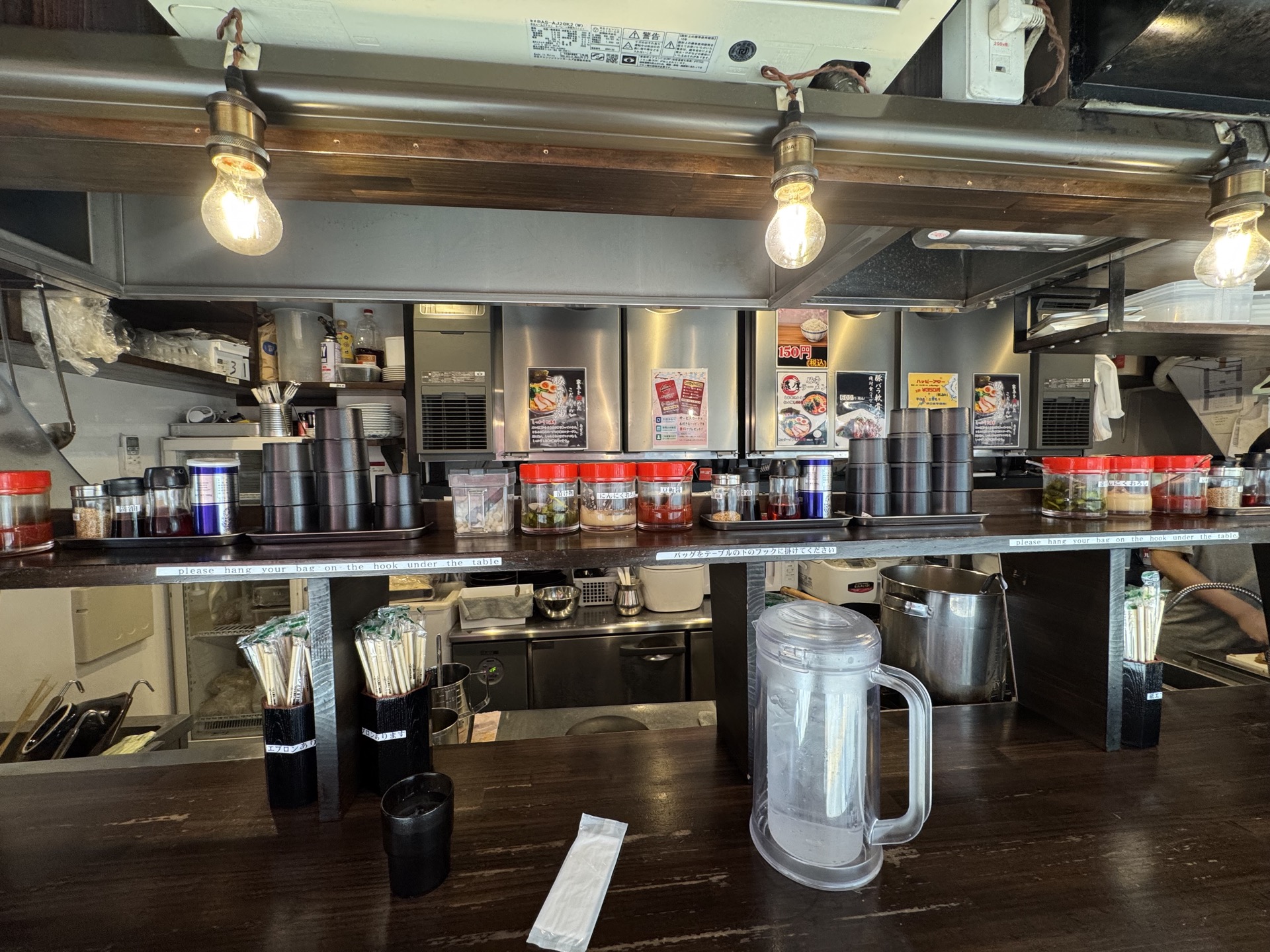
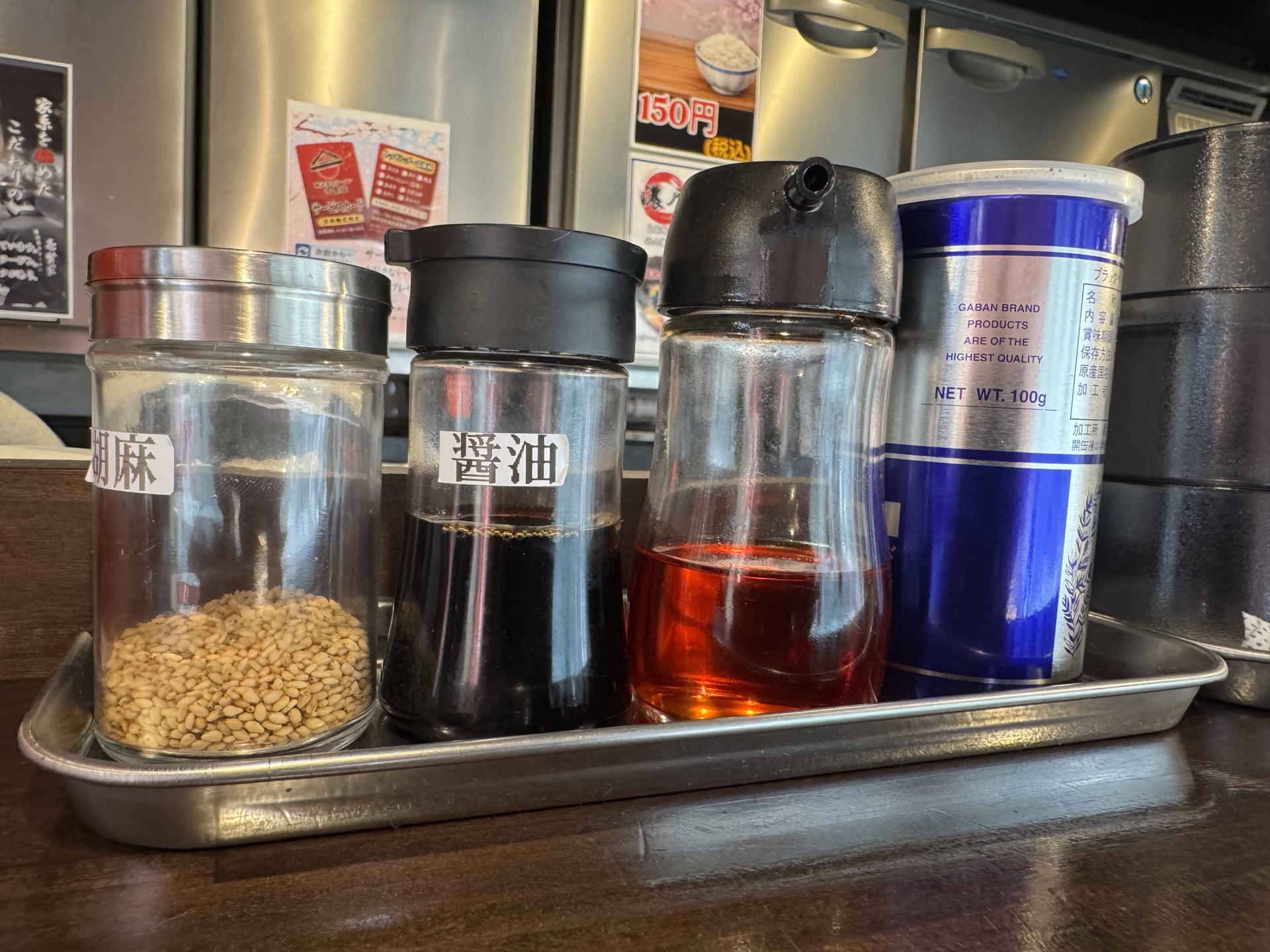
The condiment spread on the counter is worth knowing about. You'll find にんにくおろし (grated garlic), 豆板醤 (doubanjiang/spicy bean paste), 漬け物 (pickled vegetables) including cucumber and yellow daikon, sesame seeds, soy sauce, and ra-yu chili oil. Add the garlic to the broth midway through. It sharpens the whole bowl — cuts through the fat, makes the soy hit differently. The pickled daikon is there as a palate reset between sips. Use it. The broth is salty enough that you'll want it.
One practical note on ordering: there's no ticket machine and no English menu. The staff have seen enough confused tourists to be patient about pointing. If you want to come prepared, screenshot the menu table above and point at what you want. Saying kore (this one) while pointing has never failed me in four years of eating in this city.
Getting here is straightforward. Take the Osaka Metro Sennichimae Line to Nihonbashi Station Exit 10, or the Sakaisuji Line to Exit 1. From either exit, head north on Sakaisuji-dori and you'll hit it in about five minutes. The neighbourhood at 1am is quiet, urban, slightly gritty in the way that Namba-adjacent areas are — not threatening, just real. Best time to visit is honestly between 11pm and 2am on weekdays, when the post-work crowd has thinned and the kitchen is still fully energised. One tip the guidebooks will not tell you: the 営業中 (open) sign on the door is visible from the street. If it's dark, they're closed or between shifts. Save yourself the walk.
The Counter-Only Experience: What to Expect When You Sit Down
You walk in, find a stool, hang your bag on the hook under the counter edge — there's a bilingual label reminding you, in both Japanese and English, which I found oddly charming for a place this no-nonsense. Self-service water pitchers sit along the counter. You order verbally or by pointing. The kitchen is fully open, directly in front of you, stainless steel and ventilation hoods and nothing hidden. I watched my bowl get built from start to finish.
The worn patina on the dark wood counter tells you this place has been absorbing elbows and spilled broth for years. That's not a complaint. That's exactly what you want at 2am in Osaka — somewhere that's earned its roughness through use, not manufactured it through design.
Go if: You're a solo traveler, night worker, or post-izakaya wanderer who wants a salty, umami-forward Yokohama-style bowl, counter seating, and zero attitude from the staff at 3am.
Skip if: You're sodium-sensitive, need table seating for a group, want photogenic plating and Instagram light, or can't handle a narrow space with no back support on the stools.
My rating: 4.1/5 — Honest broth, exceptional hours. The salt level is real and the nori goes soggy faster than I'd like, but at ¥1,150 for the MAX bowl at 2am in Osaka, I'm not here to argue.
Frequently Asked Questions
Is Ikkenya Ramen Nihonbashi really open until 4am every night?
Based on the hours posted on the exterior signage — 昼12:00〜翌日4:00迄, meaning noon to 4:00AM the following day — yes, every day. That said, restaurant hours in Japan can change without much online notice, so if you're making a special trip after 2am, I'd recommend calling ahead on 06-6484-8865 to confirm. Going twice and finding it closed once would be on-brand for my life in Osaka, so learn from me.
What's the difference between Yokohama-style and tonkotsu ramen at Ikkenya?
Yokohama ie-kei (家系) ramen uses a combined pork bone and chicken broth finished with soy tare — the result is thicker and darker than a straight tonkotsu, with a saltier, more aggressive profile. At Ikkenya specifically, that saltiness is pronounced. The noodles are thick and flat rather than the thin straight variety you'd find in Hakata-style tonkotsu. You can choose soy (醤油) or salt (塩) as your base tare, which adjusts the colour and intensity of the broth without changing the fundamental style. First-timers: go soy.
How much does MAX ramen cost and what toppings come with it?
MAX ramen (MAXラーメン) is currently listed at ¥1,150 on the menu board. It's the most popular item — tagged 人気No.1 — and comes loaded with two soft-boiled seasoned eggs (煮卵), multiple sheets of nori, chashu pork, and spinach. A Japanese Tabelog reviewer noted that at the previous ¥1,050 price point it felt like exceptional value; at ¥1,150 it still is, given the portion size. Eat the nori fast — it goes soft quickly in this broth.
Is there an English menu at Ikkenya Osaka?
No English menu. No ticket machine either. There is a picture menu — ask for it with 写真メニューありますか (shashin menyu arimasu ka) or just show staff the menu table in this post and point. The staff are patient. This is not a place where language has ever actually stopped anyone from eating. Come with a screenshot and the situation is fine.
Can you customise the noodle firmness at Ikkenya?
Yes. Standard ie-kei practice applies — you can request 硬め (katame/firm), 普通 (futsuu/standard), or 柔らかめ (yawarakame/soft). I'd recommend katame on a first visit, especially if you're a slow eater. The thick flat noodles absorb broth fast and go noticeably soft by the bottom of the bowl at standard firmness.
Can you walk in or do you need reservations at Ikkenya Osaka?
Walk-in only. There's no reservation system — it's a 10-stool counter ramen shop. During peak dinner hours (7–9pm) there may be a short wait on the street, but late-night visits on weekdays after 11pm have been walk-in-and-sit in my experience. The 営業中 sign on the door tells you everything you need to know before you commit to the approach.
Which exit should I use from Nihonbashi Station to get to Ikkenya?
Exit 10 from the Sennichimae Line, or Exit 1 from the Sakaisuji Line. Both put you on Sakaisuji-dori heading north. Five minutes of walking, one right turn. At 2am this is the information that matters — not "approximately five minutes from Nihonbashi Station."
One last thing. If you're building a proper late-night Osaka itinerary — izakaya first, ramen after — I've written a full guide to the Namba and Nihonbashi corridor after dark that pairs well with this https://www.osakatravelinsider.xyz/2026/04/tullys-coffee-osaka-best-locations.html. Bookmark this page for your second night in the city, when the tourist version of you has burned off and you're ready to actually eat like someone who lives here.
Go at 2am. Order the MAX. Ask for katame. Eat the nori before it gives up on you. Hang your
📍 Location & Access
📍 View on Google MapsMore Osaka Food Guides
More Photos

Post a Comment