
The queue told me everything.
Eight people at 11:47am on a Friday, threading along white bollards on a Sennichimae side street. By noon: sixteen. By 12:30pm, a guy in front of me checked his phone, muttered something I didn't catch, and left. I stayed. The bowl I eventually sat down to — Jiro-style ramen, soy-and-pork-fat broth, thick noodles, ¥950 — was worth the forty-five minutes in a way I wasn't expecting. Not perfect. Actually quite salty. But the kind of specific that sticks with you when you try Jiro-style somewhere else afterward and notice something's missing.
That's the short answer. Here's everything else you need before you go.
📋 At a Glance
| 📍 Address | Sennichimae, Namba, Chuo Ward, Osaka (203m from Namba Station) |
| 🕐 Hours | Mon, Wed–Sun: 11:00–15:00 / 18:00–22:00 · Closed Tuesday |
| 💴 Budget | ¥950–¥1,999 per person |
| 🚇 Access | 5-min walk from Namba Station Exit 11 (Nankai) · 6-min from Nipponbashi Station Exit 2 (Sakaisuji Line) |
| 💳 Payment | Ticket machine accepts cash, credit card, IC/e-money, mobile pay |
| ⭐ Best For | Solo travelers who want to eat where Japanese ramen obsessives actually queue |

The 45-Minute Wait Is Real—But Here's When It Disappears
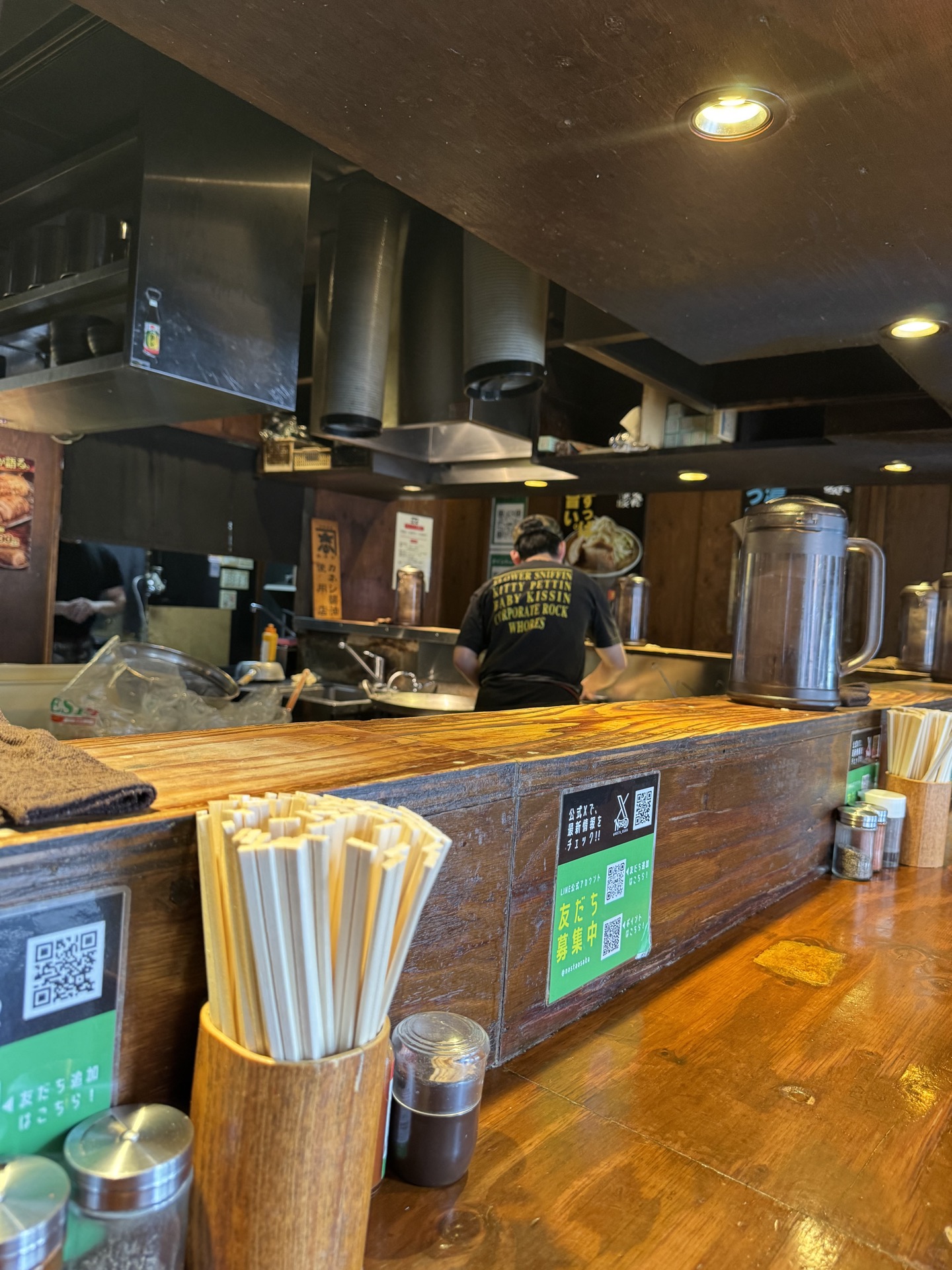
At 3:15pm that same Friday — same street, forty minutes after the lunch crowd dissolved — I walked straight to a counter stool. No queue. No bollards. Just an empty seat and the low hum of a kitchen winding down between services.
The waits reviewers complain about online are real. They cluster hard around two windows: lunch from 11am to about 12:30pm, and dinner from 7pm to 8:30pm. Outside those? The chain stays unclipped. You walk in.
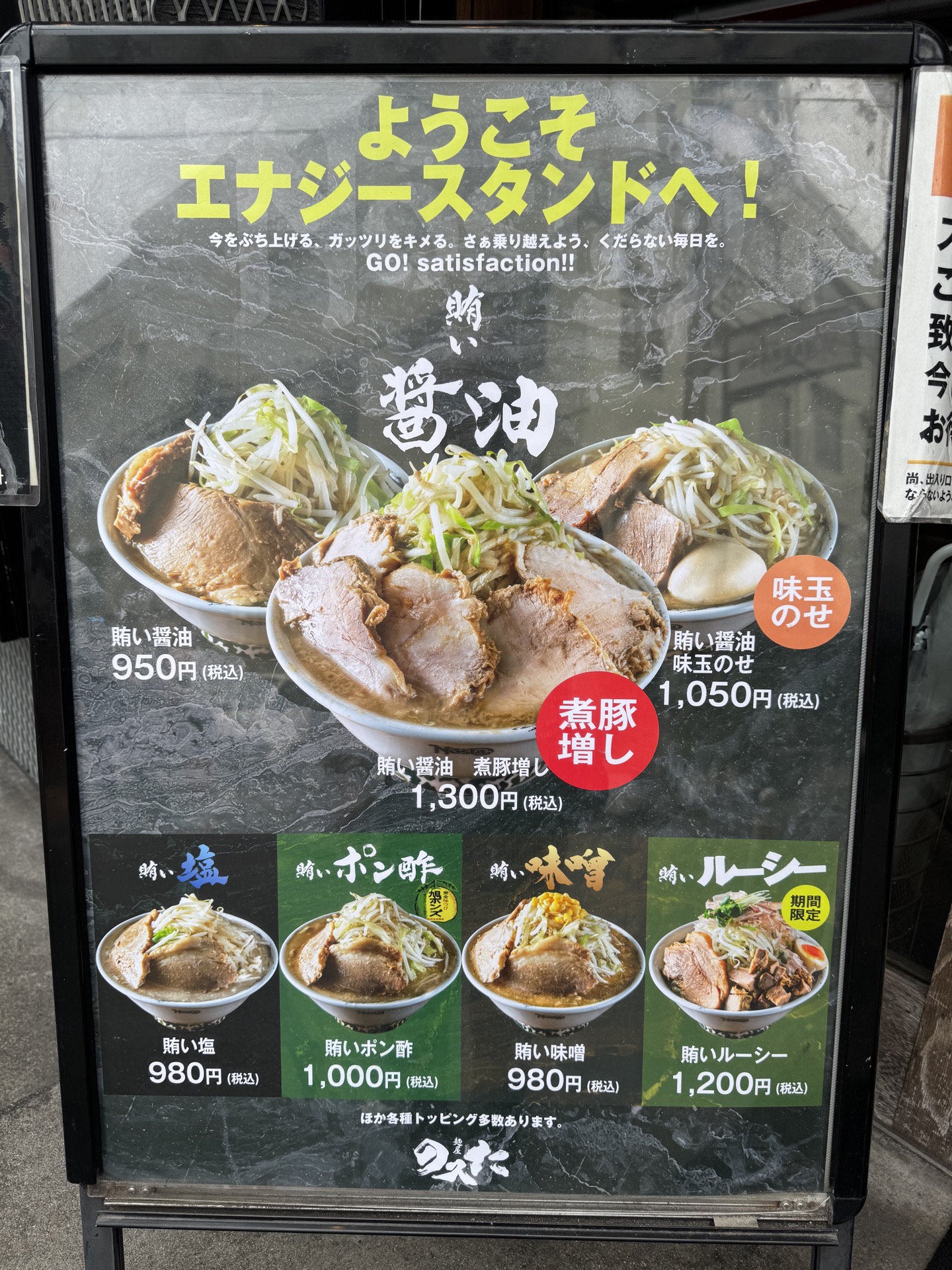
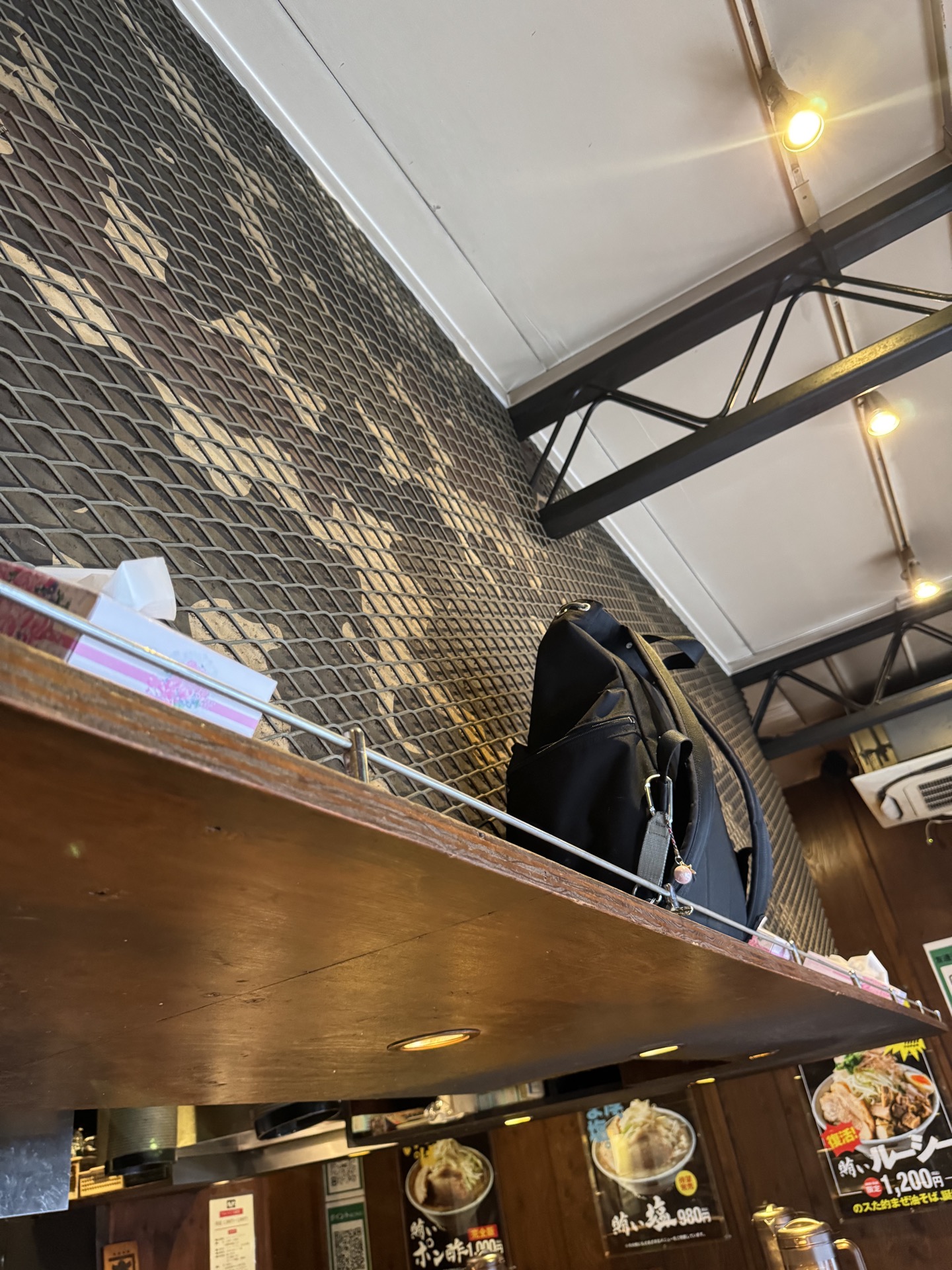
The interior rewards the closer look you get when it's not packed. Dark varnished wood counter. Black ceiling, amber spotlights, industrial steel trusses.
There's a red robot in the corner. Mazinger-era. Nobody mentions it.
It sits on a high shelf watching you eat, chunky and deadpan, with a thin layer of something accumulated at the base that suggests it's been there since before the reviews started. The rest of the room is extremely serious about ramen. The robot has decided not to be. I find this comforting.
The counter has bag hooks along the ledge, stainless water pitchers at intervals for self-service, and a touch-screen ticket machine near the entrance that operates in Japanese, English, Chinese, and Korean. Four noodle quantity options: 100g, 200g, 300g, 450g. I ordered 200g on my first visit. I was still eating when the broth ran out and felt annoyed at myself. Order 300g. This is not a bowl you want to finish early.
One honest note: the shop sits on a utility-pole-heavy side street with graffiti on the adjacent wall. Not a polished tourist precinct. This is the version of Namba that actual Osaka people eat in, which is either a selling point or a dealbreaker depending on what you came here for. After reading through the Google reviews before my visit, I expected something more finished-looking. It isn't. The 18,523 Tabelog saves don't come from the interior design.
What's Actually in the Bowl
二郎系 — What "Jiro-Style" Actually Means Here
Jiro-style ramen (二郎系ラーメン) is a specific subgenre: thick chewy noodles, aggressively rich broth, a serious pork component, portions that err toward too much. The broth here is soy-sauce-based and hits you before the noodles do. Visibly fatty. Opaque in the way that means the fat and liquid have stopped being separate things — and have, somewhere in the cooking process, become something neither of them was on their own. One Tabelog reviewer put it simply: "a flavor that hits you right from the first bite, unforgettable and direct." That's not hyperbole. It's an accurate description of what the first spoonful does.
Here's the honest problem: the broth is salty in a way that shows up the next morning as a faint tightness behind your eyes and a specific reluctance to drink water. One complaint that keeps showing up online is exactly this — multiple reviewers describe the flavor profile as leaning hard salty, strong rather than delicate. I've finished the shoyu twice. Both times I woke up at 3am and lay there regretting nothing and also definitely regretting it a little. Worth knowing before you queue forty-five minutes for it.
The Noodles
Thick. Straight-cut, not wavy — almost square in cross-section, the kind of width where a single noodle is an actual object you're aware of in your mouth. Machine-cut consistency rather than the irregular pull of handmade, which means every strand holds up identically to the last mouthful. Japanese reviewers on Retty tend to highlight the word 風味 here — a wheaty, slightly fermented depth underneath the chew — and describe the noodles as 太めでもっちり: thick and chewy, with good flavor throughout. That's accurate. It's the kind of quality you register only when cheaper noodles lack it entirely.
The Pork
The braised pork (煮豚) is soft without being mushy — the texture that takes hours and is easily get wrong. I've had braised pork at four other Jiro-style shops in Osaka. Two of them tasted like the pork had been waiting for me specifically, in the worst way. This didn't. It tasted like it had been made that morning and was still relevant. A Korean visitor eating here as their first meal in Osaka noted the same thing on Wanderlog: the pork is soft and the quality shows.
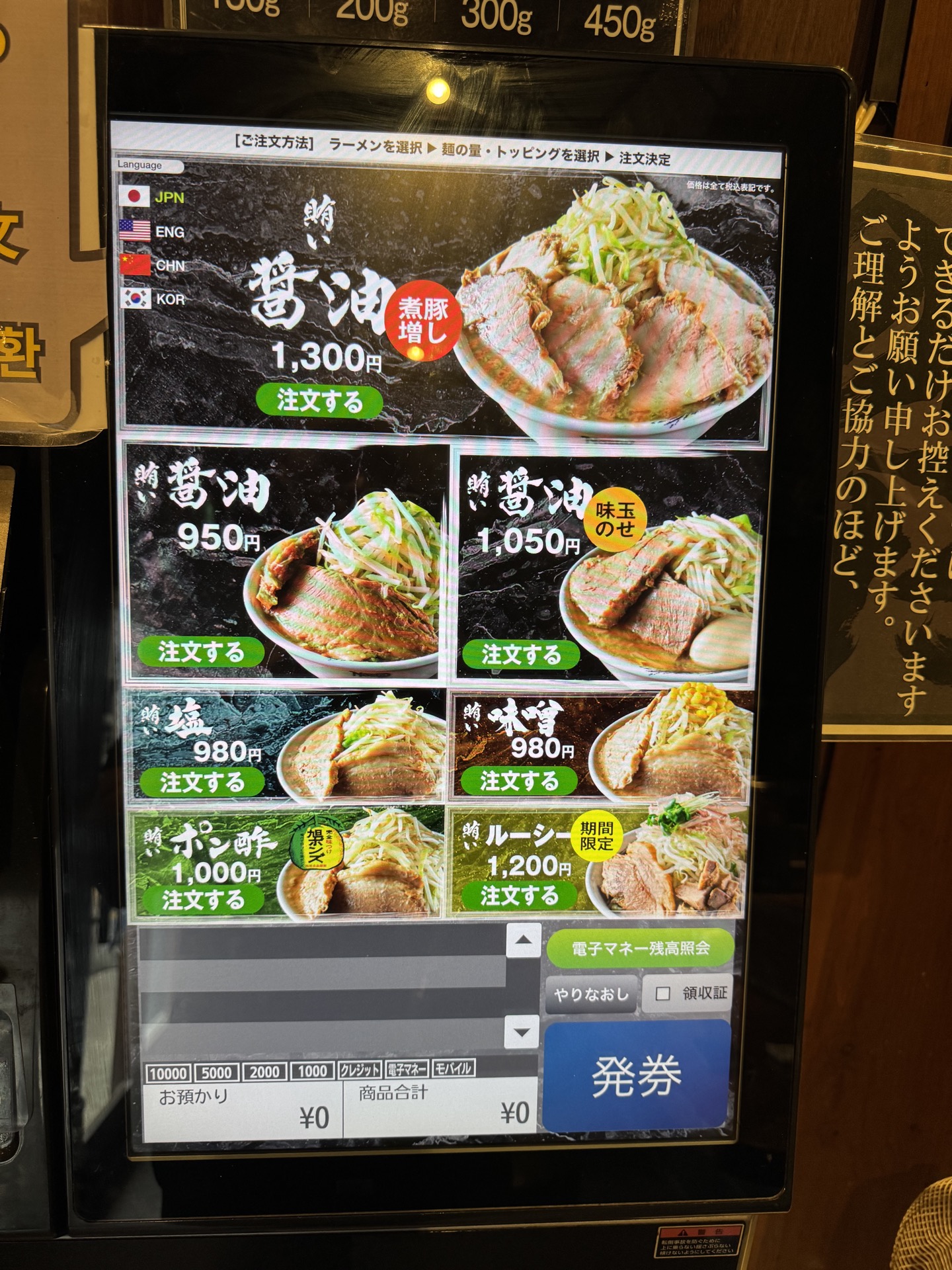
The weak point: portion sizing relative to the price step. The base bowl at ¥950 gives you two slices of pork, which is correct for the price but disappears faster than the noodles do. The 煮豚増し (extra pork) upgrade brings you to ¥1,300 — a steep jump for two or three additional slices. The math doesn't stop me ordering it, but it's not nothing.
| Item | Price | Alex's Take |
|---|---|---|
| 賄い醤油 · Makanai Shoyu (soy sauce) | ¥950 | The entry point and the one to start with. Most direct expression of what this shop is. |
| 賄い塩 · Makanai Shio (salt) | ¥980 | Cleaner broth, lets the pork carry more weight. Counterintuitively less salty-feeling than the shoyu. |
| 賄い味噌 · Makanai Miso | ¥980 | Sweet-leaning. Rounds the edges. Order a side of white rice with this one — it earns it. |
| 賄いポン酢 · Makanai Ponzu (citrus) | ¥1,000 | The odd one. Ponzu-based broth cuts the fat with acidity. Sounds wrong. Isn't. |
| 賄いルーシー · Makanai Lucy (limited) | ¥1,200 | Seasonal run. If it's on the machine, order it. No further justification needed. |
| 賄い醤油 煮豚増し · Shoyu + extra pork | ¥1,300 | The jump from ¥950 is steep for the portion increase, but the pork is the best thing in the bowl. |
| 賄い醤油 味玉のせ · Shoyu + seasoned egg | ¥1,050 | ¥100 upgrade. Soft-boiled, well-seasoned. Just add it. |
The 4 Makanai Broths: Which One First, Which One to Save
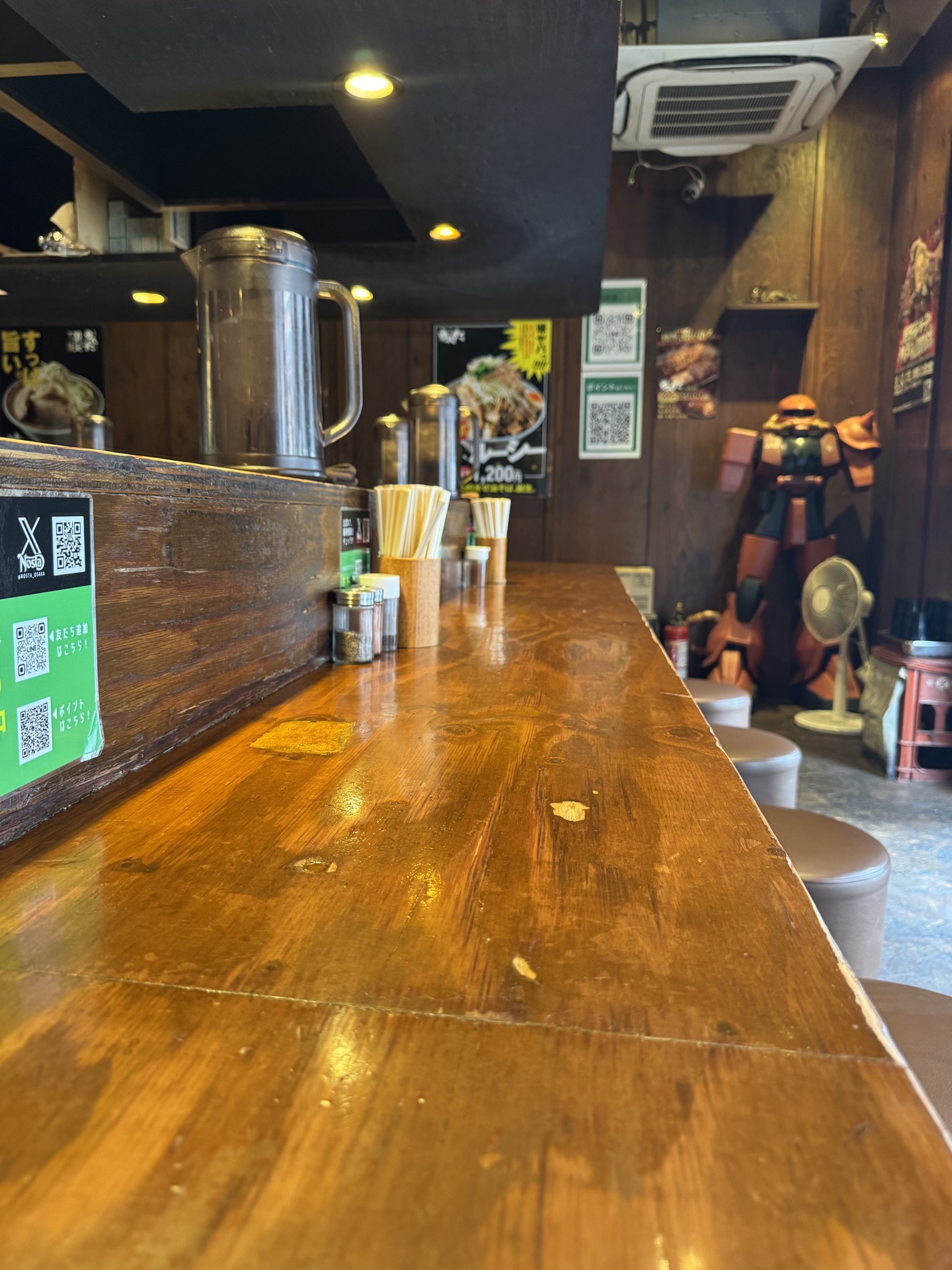
"Makanai" (賄い) means staff meal — the food a kitchen makes for its own people, unsentimental and generously seasoned. Menya Nosuta uses this word for its entire broth lineup. That's a position, not branding. These broths aren't engineered for a careful first impression. They're built to satisfy someone who's been on their feet since 10am.
Here's the exact decision tree for navigating them:
Visit 1 — 賄い醤油 (Makanai Shoyu, ¥950) + 味玉 (seasoned egg, +¥100) + 300g noodles. Full stop. This is the bowl the shop is built around, the one that appears on the exterior wall poster, the one Tabelog reviewers describe as "one of a kind, direct, unforgettable." I'd put it more plainly: the soy sauce and the fat have stopped fighting each other, and the result has a kind of inevitability to it. The ¥100 egg is non-negotiable — soft-boiled, well-seasoned, and the one component that cuts through the salt rather than adding to it. Order 300g noodles. You will not regret having more noodle. You will regret having less.
Visit 2 — 賄いポン酢 (Makanai Ponzu, ¥1,000) + 300g noodles. A citrus-based ramen broth sounds like a decision someone made to be interesting. It is interesting. The acidity cuts the fat in a way that makes the pork taste different — cleaner, more like an actual piece of meat and less like an extension of the broth. This is the one non-ramen people tend to prefer. I mean that descriptively, not as an insult. If you found the shoyu too heavy on visit one, this is the correction.
Visit 3 — 賄い味噌 (Makanai Miso, ¥980) + side of white rice. Sweeter profile, softer edges. Most of the Retty reviews I checked mentioned that the miso broth's sweetness makes it the most rice-friendly option on the menu — 白ごはんが進む, the kind of broth that makes you keep reaching for another spoonful alongside plain rice. Not the most distinctive of the four, but the most forgiving — order this when you're tired, or when two previous visits have recalibrated your salt tolerance downward.
Visit 4 — 賄い塩 (Makanai Shio, ¥980) + 煮豚増し (extra pork, brings total to ¥1,300). The subtlest broth on the menu, and the one that gets wasted on a first visit. The soy isn't drowning it here, which means the pork has more room to exist as its own thing. You won't appreciate what it's doing until you've had the shoyu and understand what's being left out. Save this one. When you finally get to it, order the extra pork — by this point you've earned the right to spend ¥1,300 without overthinking it.
Any visit — if 賄いルーシー (Makanai Lucy, ¥1,200) is on the machine, order it instead of whatever you planned. Seasonal run. No further justification.
Getting here: Exit 11 from Namba Station (Nankai Line), north toward Sennichimae, roughly 5 minutes. Stay on the narrow commercial streets — don't drift toward Dotonbori or you'll overshoot. From Nipponbashi Station (Sakaisuji Line), Exit 2 is 6 minutes on foot. Matte-black building, white noren curtain, probably a queue. If there's no queue, it's either Tuesday (closed) or you timed it right.

Honest Verdict
Real problems. Real strengths. Don't go in pretending otherwise.
The salt level is high enough to cost you sleep. The pork-to-price ratio at the base level is tighter than it should be. The side street means you will walk past it once before finding it, probably while already hungry. None of this is dealbreaking. All of it is real.
What keeps Japanese regulars coming back is the shoyu broth — specific enough that its absence registers at every other Jiro-style shop afterward. The thing locals consistently point out is that the spicy miso variant at ¥850 is equally worth the queue: the Retty crowd calls its popularity 流行ってるのも納得, meaning the hype is well-deserved, and that assessment holds up on the noodles alone. The noodles are among the better executions of the style I've found in Osaka across a lot of mediocre attempts. The pork, when it's good, is really good. The Tabelog score of 3.52 from 865 reviews sounds modest until you see 18,523 saves next to it. In Japanese food culture, saves are intent. That number means locals have quietly decided this place is worth returning to, regardless of how the score looks by Western five-star logic.
My rating: 4/5. A deeply specific bowl for people who want a deeply specific bowl. Use Exit 11. Go at 3pm. Order the shoyu, add the egg, get 300g noodles. Drink water on the train home. Thank me later — or don't, and find out about the 3am wake-up yourself.
Frequently Asked Questions

How long is the wait at Menya Nosuta Namba?
Peak lunch (11am–12:30pm) and dinner rush (7pm–8:30pm): plan for 45 to 60 minutes on the sidewalk. The kitchen turns seats fast once you're inside, so the queue moves — but it's a real queue on a real sidewalk in whatever weather is happening that day. Dress for standing still.
Is Menya Nosuta Osaka worth the queue?
For Jiro-style specifically, yes — assuming assertive soy-forward broth and thick noodles are what you're here for. If you just want a decent bowl of ramen somewhere near Namba without committing forty-five minutes to the sidewalk, this is probably not your move. Go in knowing what it is.
What time should I go to avoid the line at Menya Nosuta?
3pm to 5pm. Lunch has cleared, dinner hasn't started. I walked straight to a counter seat at 3:15pm on a Friday — a day when noon had sixteen people in the queue outside. Set a reminder if you have to.
Does Menya Nosuta accept reservations?
Walk-in only. Queue, wait, eat. The ticket machine does Japanese, English, Chinese, and Korean, so ordering is straightforward even without Japanese. The queue is orderly — nobody cutting, no jostling, just people waiting for ramen with the specific patience Osaka has developed for this exact situation.
What is the best ramen to order at Menya Nosuta Namba?
First visit: 賄い醤油 (Makanai Shoyu, ¥950) with the soft-boiled egg add-on (¥100) and 300g noodles. Second visit: 賄いポン酢 (Makanai Ponzu, ¥1,000). After that, work through the miso and shio in that order. If 賄いルーシー is on the machine at any point, override everything and order that instead.
Which exit from Namba Station for Menya Nosuta?
Exit 11, Nankai Line. North toward Sennichimae, about 5 minutes on foot. Don't drift toward Dotonbori — you'll overshoot and end up hungry in the wrong place, which is a bad combination. From Nipponbashi Station (Sakaisuji Line), Exit 2 is 6 minutes. Matte-black building, white noren curtain. If there's a queue, you found it.
If you're building out a full Namba eating itinerary beyond ramen, I've mapped the Sennichimae local eating circuit — spots within a 10-minute walk that don't appear on tourist itineraries — over on the Osaka Travel Insider neighborhood guide. It pairs well with this one, especially if you're here for two or three days and want to move past the Dotonbori conveyor belt.
Save this post before you leave for the airport. The exit number and the 3pm timing window alone will save you an hour of standing in the wrong place at the wrong time, hungry, reading the same Google Maps review on your phone for the third time.
📍 Location & Access
📍 View on Google MapsMore Osaka Food Guides
Post a Comment